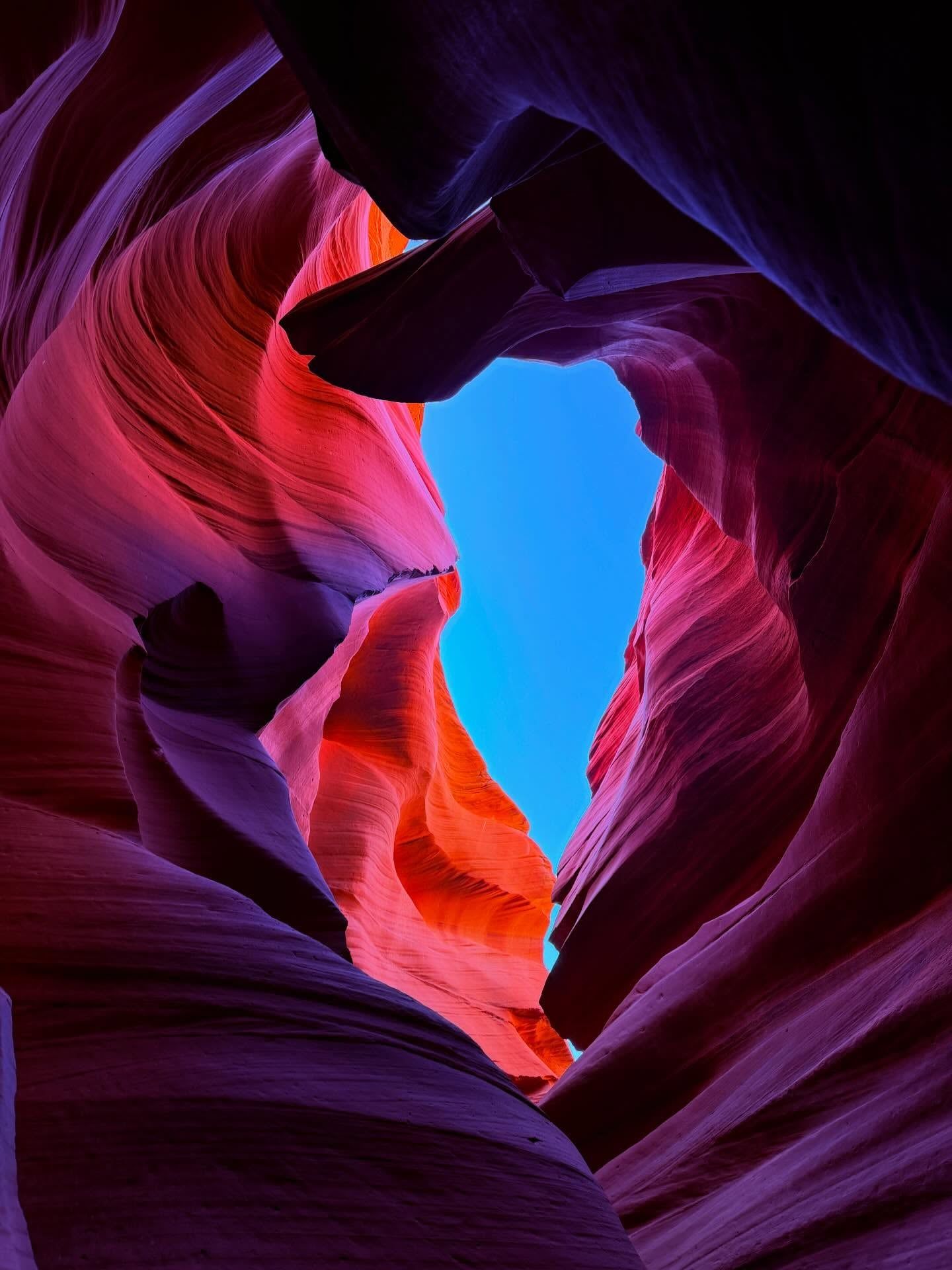
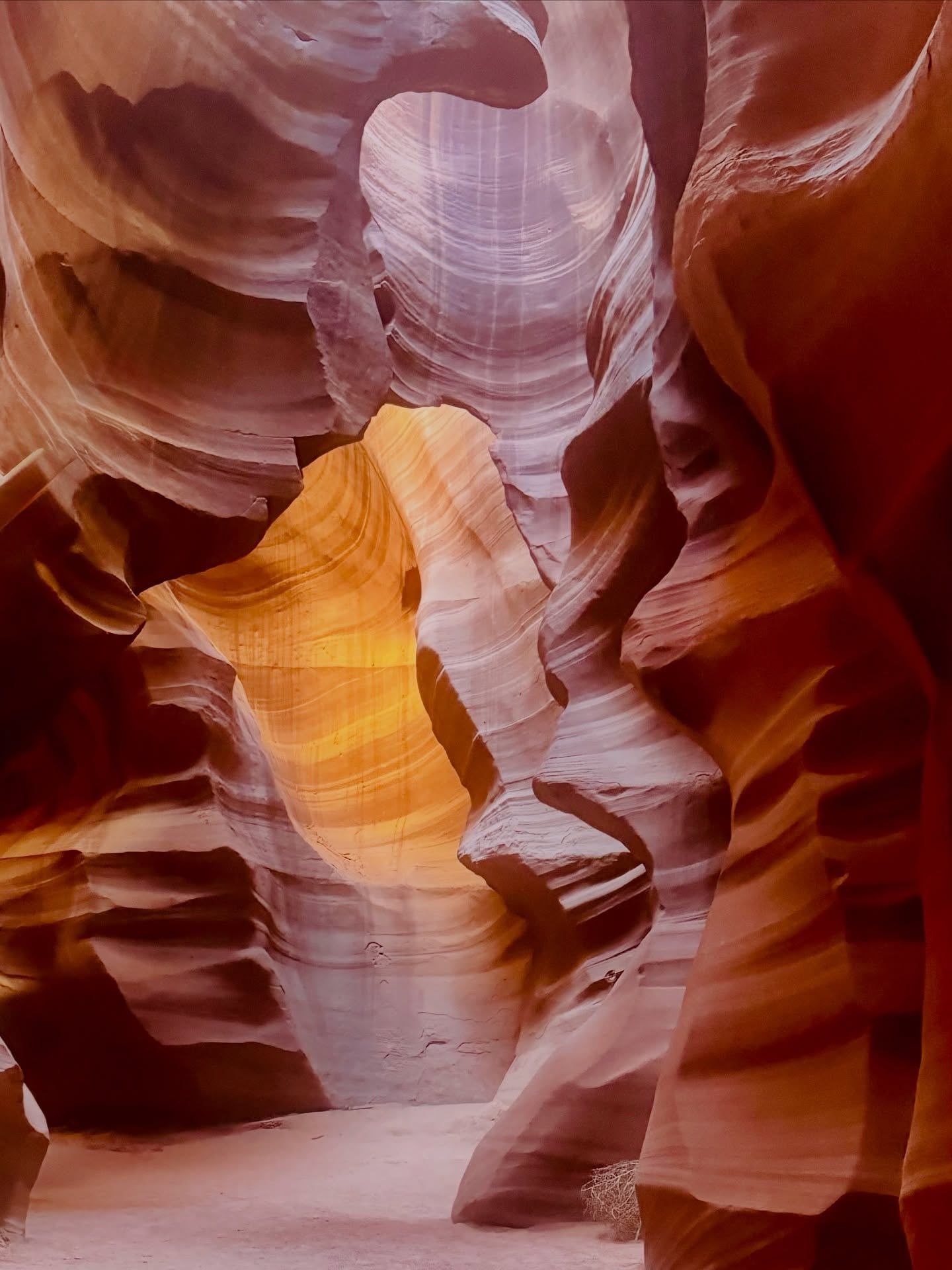
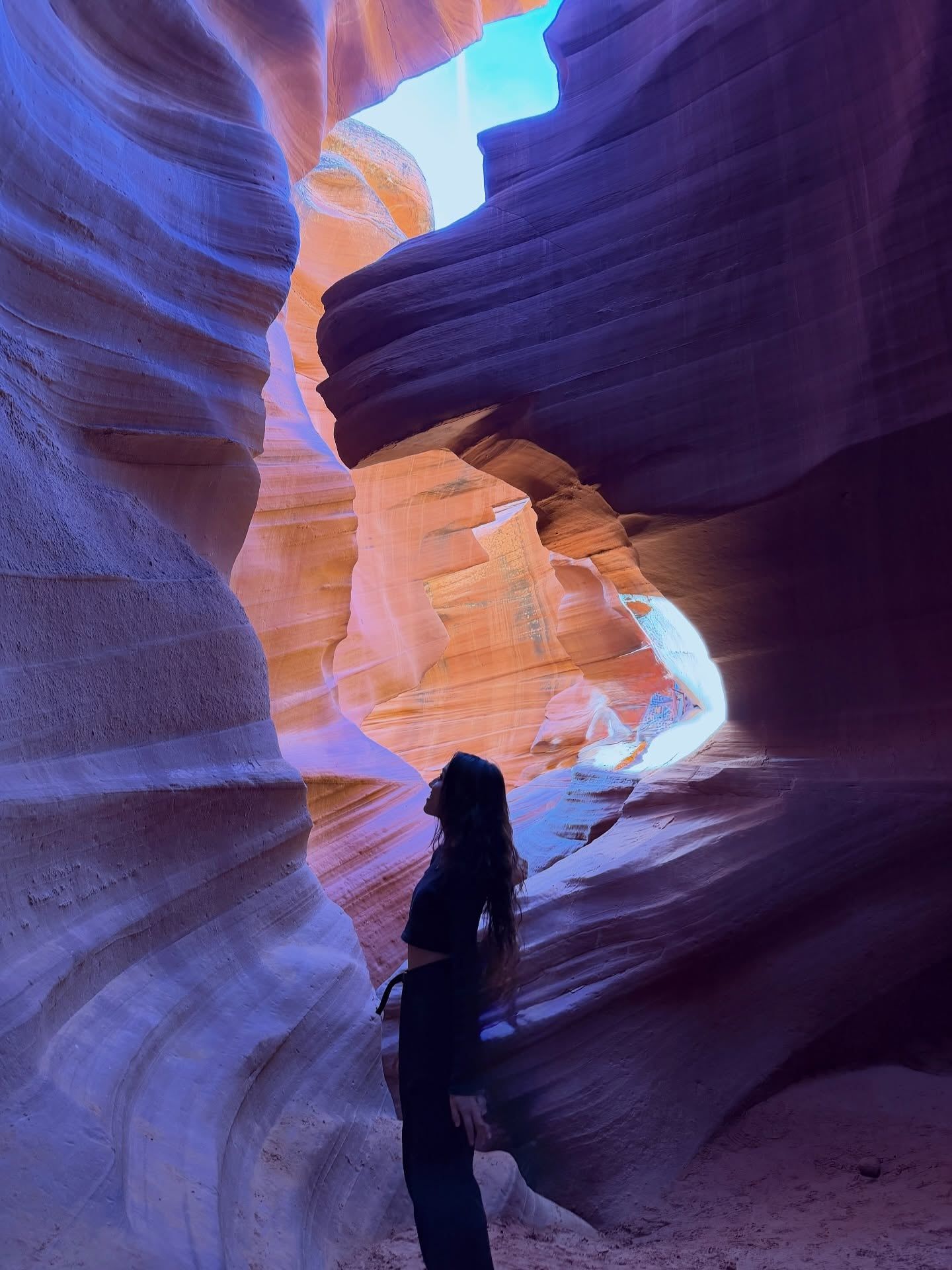
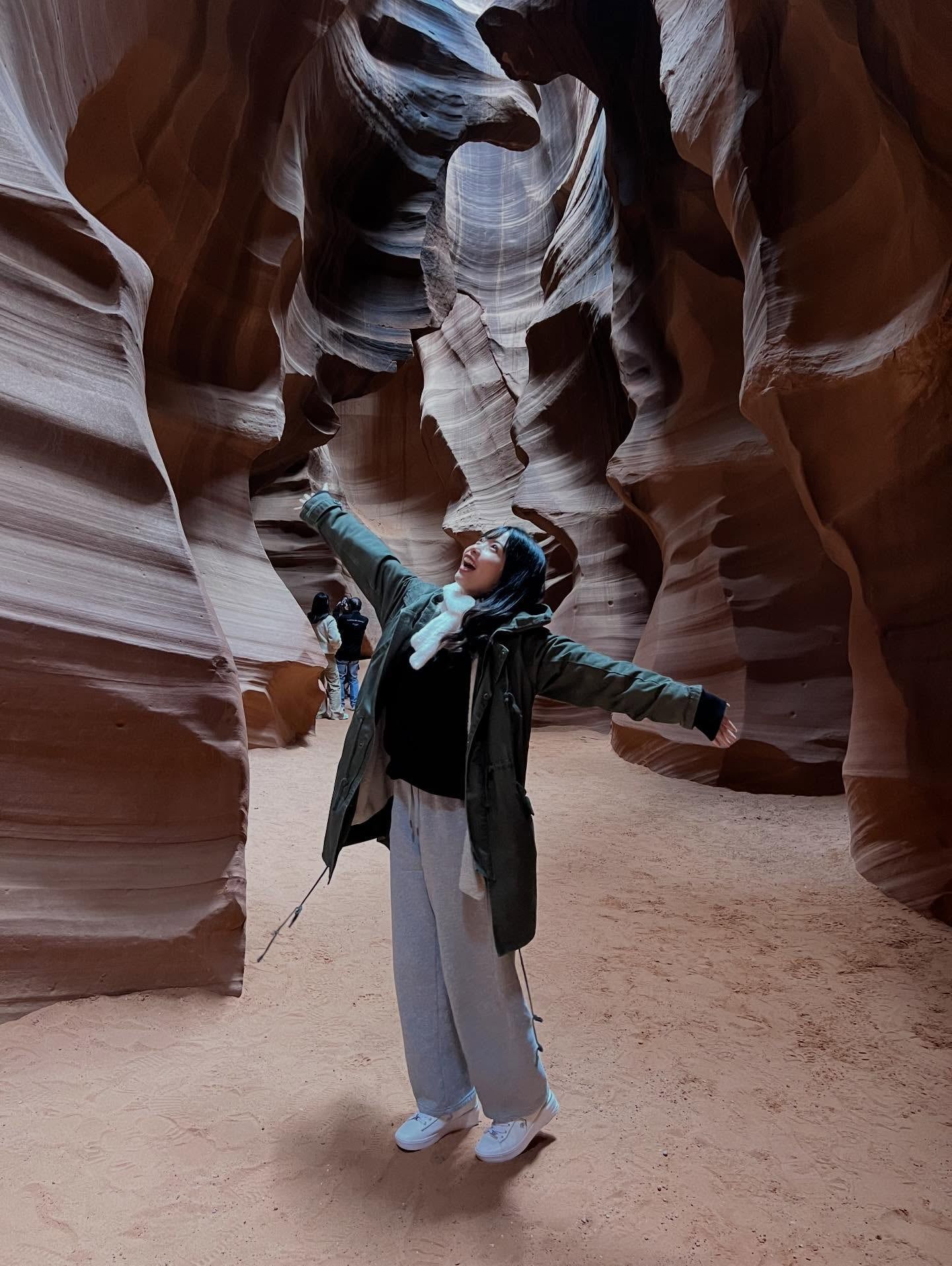
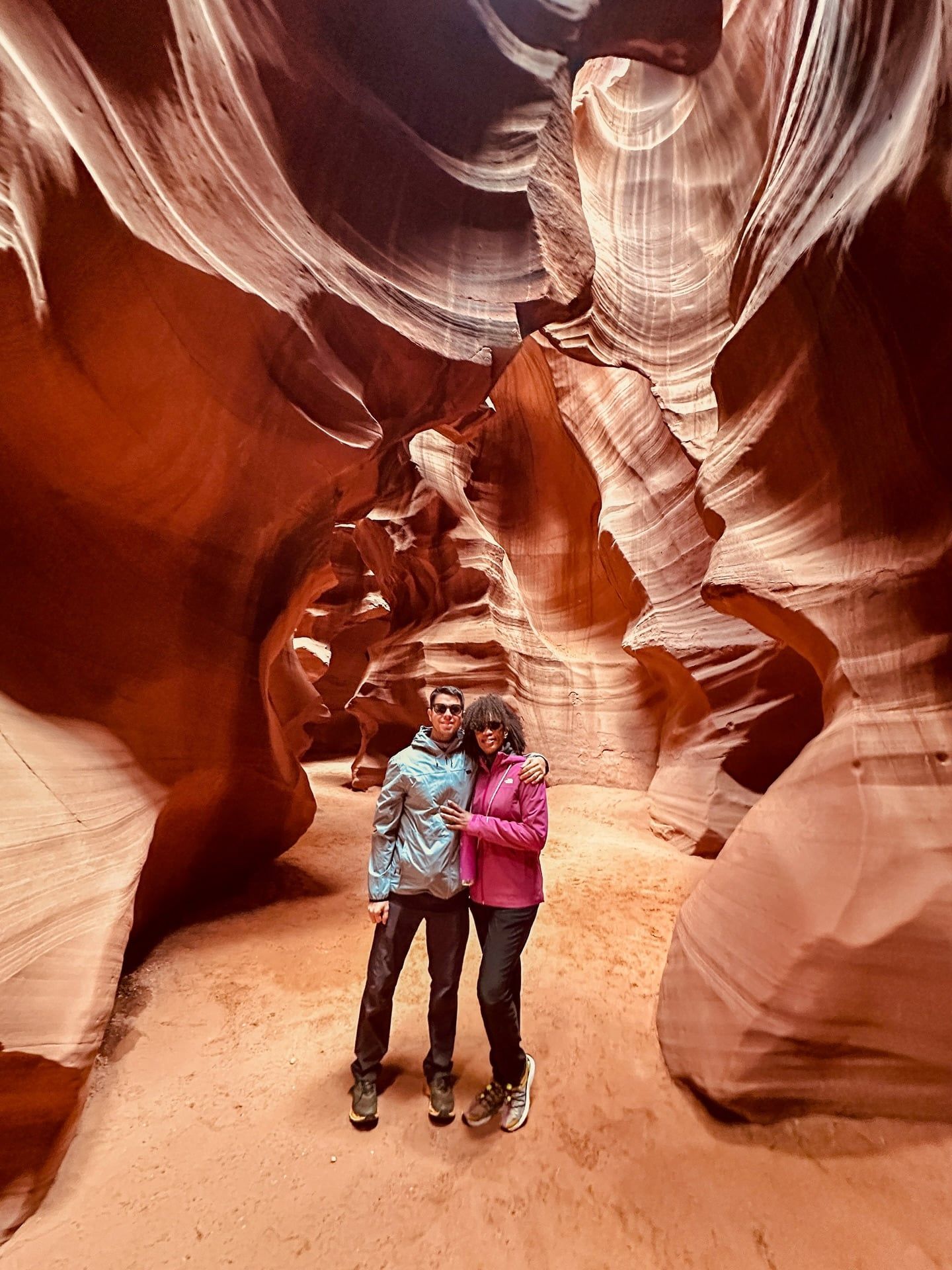
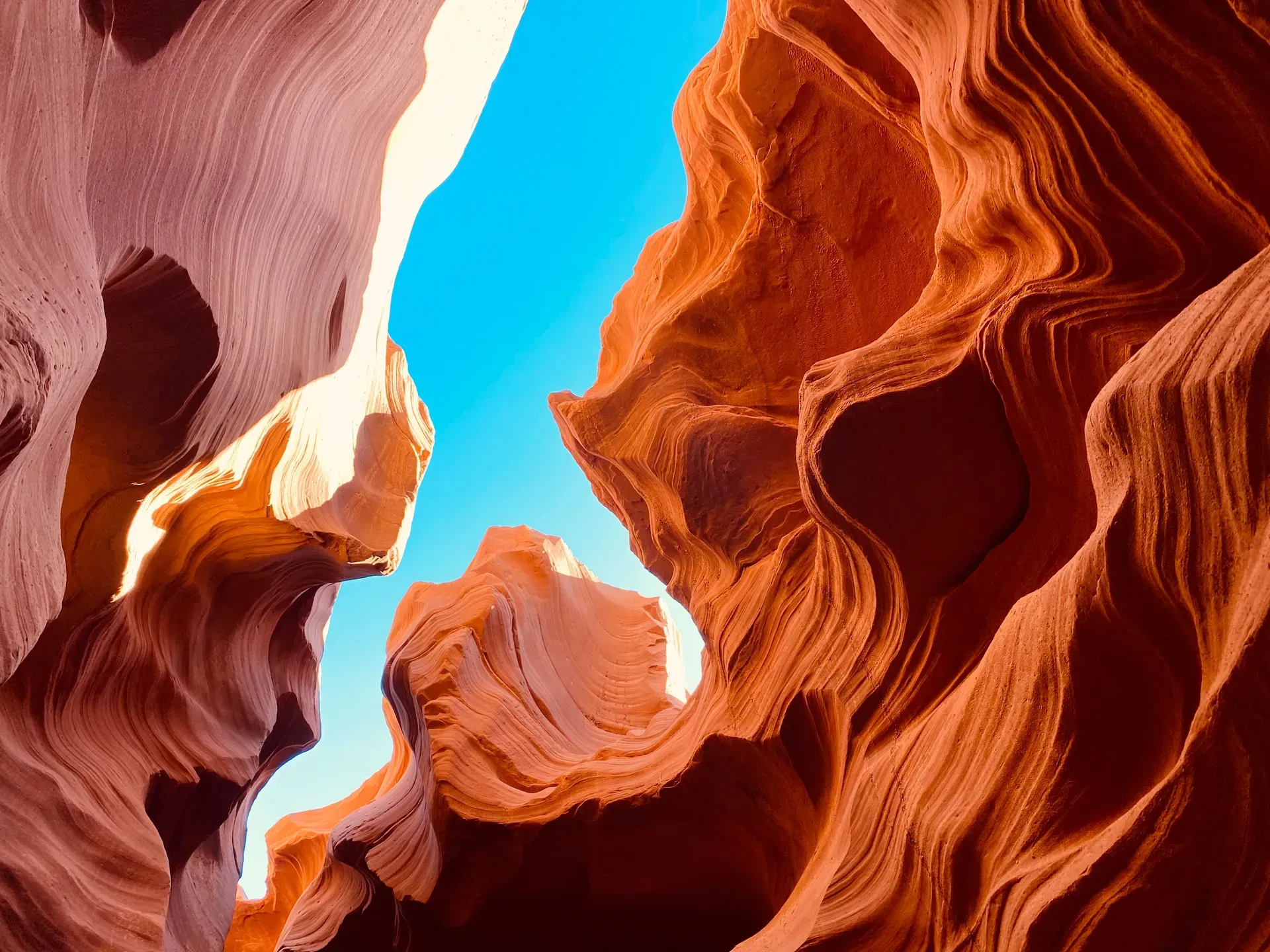
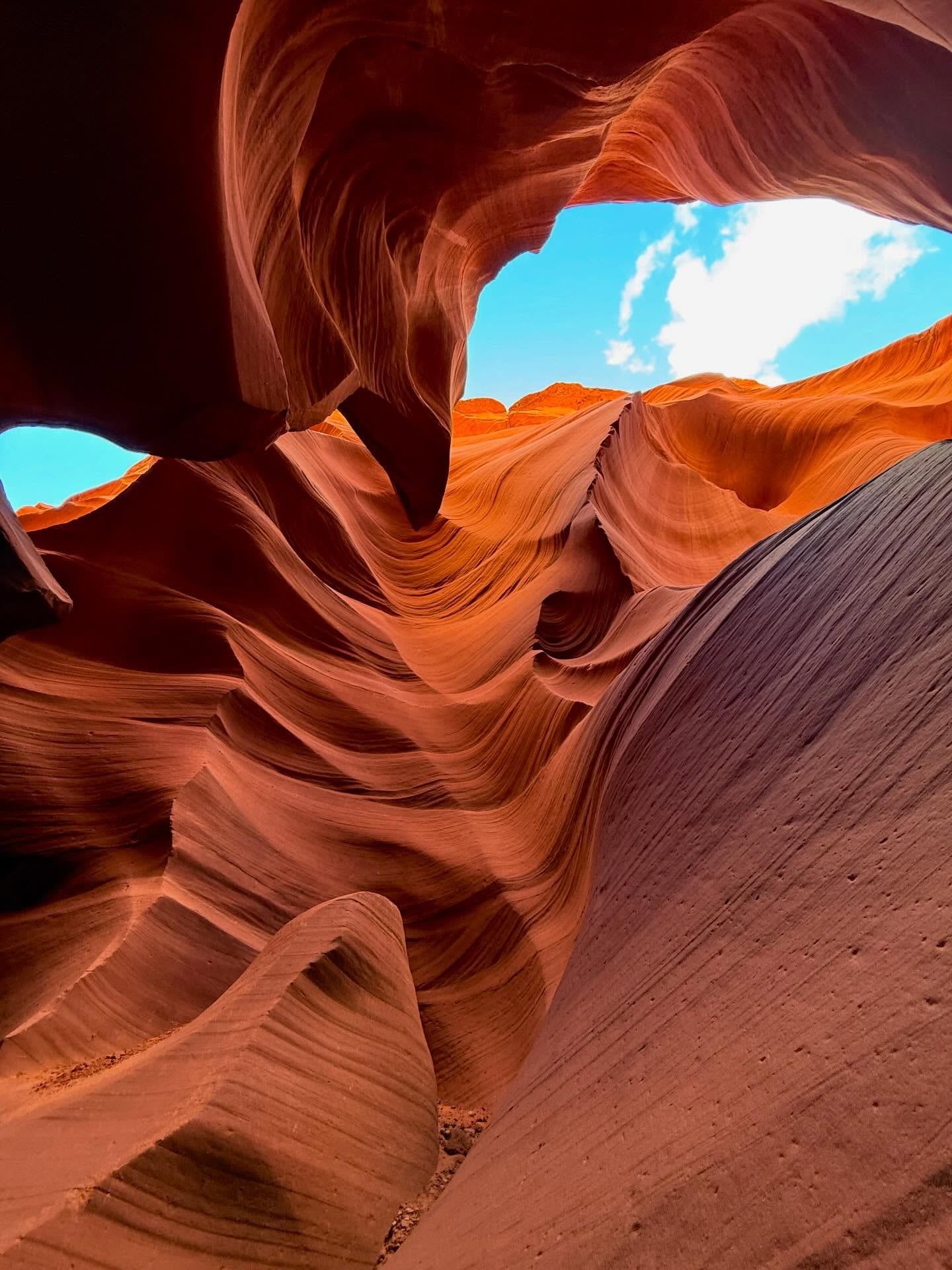
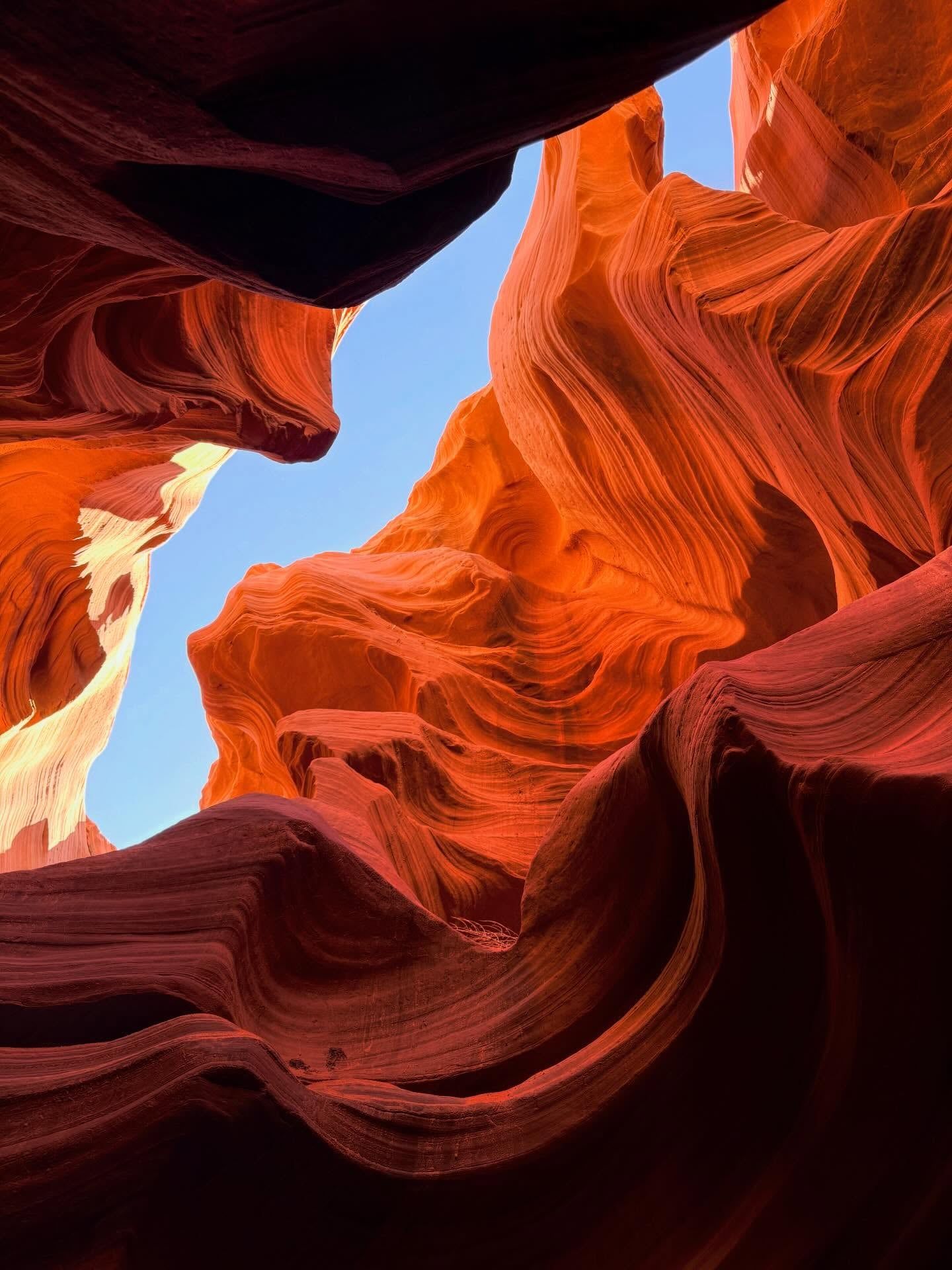
Carved by millions of years of flash floods, Antelope Canyon features 120-foot-tall Navajo Sandstone walls that reveal swirling layers of orange, gold, and violet. Authorized Navajo guides lead visitors through these narrow, wave-like corridors to witness spectacular shafts of sunlight beaming down to the sandy floor.
Find Guided ToursAntelope Canyon is a slot canyon located in the northernmost part of Arizona within the Navajo Nation, near the city of Page. Known for its narrow, winding passageways and wave-like sandstone structures, the site is divided into two primary sections: Upper Antelope Canyon, also called The Crack, and Lower Antelope Canyon, known as The Corkscrew. Other scenic sections include Canyon X and Secret Canyon.
The canyon was formed over millions of years by the erosion of Navajo Sandstone, which dates back 8 to 60 million years. Flash flooding is the primary force behind this geological creation. Rainwater rushes into the extensive basin above, gathering speed and sand to carve and smooth the corridors. Today, the canyon floor sits at an elevation of 3,704 feet, with the Upper Canyon reaching around 4,000 feet. The sculpted walls rise up to 120 feet above the dry streambed.
The site holds deep spiritual and cultural significance for the Navajo (Diné) people, who regard it as a sacred monument and a living part of Mother Earth. The Navajo name for the Upper Canyon is "Tsé bighánílíní," meaning "the place where water runs through rocks." The Lower Canyon is referred to as "Hazdistazí," which translates to "spiral rock arches." Its English name originates from the herds of Pronghorn Antelope that once grazed in the area during the winter.
Accounts of the canyon's discovery vary. Navajo elders maintain that "Long Walk" holdouts took refuge inside the canyon during the late 1800s, while another popular account attributes its discovery to a young Navajo girl herding livestock during the Great Depression. Tourism began expanding in the 1970s after a local Navajo cattle owner brought the first photographers to the site, leading to images published in National Geographic. In 1997, Antelope Canyon was designated a protected Navajo Tribal Park.
Discover the full history and cultural significance on our About page.
Walk the flat, sandy floor of Upper Antelope Canyon to witness shafts of sunlight penetrating the narrow ceiling. These light beams appear during peak hours between 11:00 AM and 1:00 PM from April through October. The 660-foot corridor provides ideal conditions for photographing the illuminated sandstone.
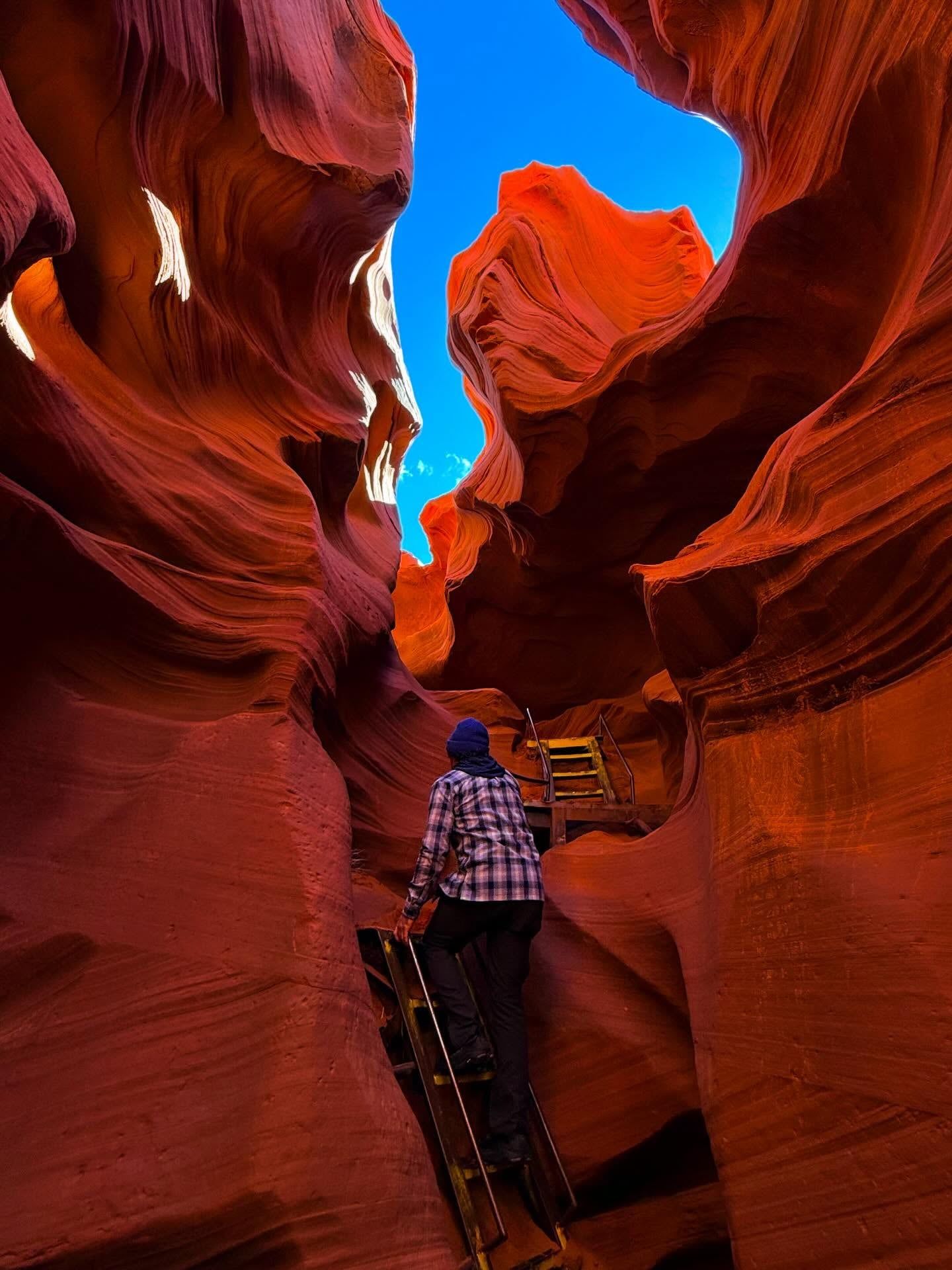
Descend five flights of steep metal stairs into Lower Antelope Canyon. This 1.1-mile round-trip route requires navigating narrow, V-shaped sandstone bends and climbing ladders. The physical trek puts visitors deep inside the 120-foot canyon walls, offering a more active alternative to the flat paths of the Upper section.
Authorized Navajo guides lead every tour through the protected tribal park, established in 1997. They share traditional Diné creation stories and explain the sacred significance of Mother Earth. Guides also provide practical assistance, adjusting camera settings to properly capture the orange, gold, and violet sandstone layers.
Flash floods carving through the desert basin have sculpted these narrow slot canyons over millions of years. The smooth, wave-like corridors are formed from Navajo Sandstone estimated to be 8 to 60 million years old. Visitors can closely observe the swirling, striated patterns carved into the rock.
Hand-picked tours with free cancellation and verified reviews
Free Cancellation
Free Cancellation 1h
1h
Free Cancellation 15h
Free Cancellation 1h 20min
Free Cancellation
Free Cancellation
Likely to Sell Out 1h 30min The ideal time to visit Antelope Canyon is between April and October, specifically from 11:00 AM to 1:00 PM when the iconic light beams appear. Spring and autumn provide the best balance of excellent lighting and mild temperatures.
Spring provides excellent lighting and milder temperatures, making the outdoor segments and canyon walks comfortable. By April, the sun reaches a high enough angle to create the famous midday light beams.
Summer offers the highest sun angles for capturing light beams. However, extreme desert heat poses dehydration risks, and the monsoon season starting in July brings high probabilities of flash flood cancellations.
September and October maintain excellent lighting and mild temperatures for comfortable touring. However, September carries residual monsoon flash flood risks, and by November, the light beams are no longer visible.
Winter is the least optimal time for photography. Due to the sun's lower angle, the canyon's famous light beams are not visible, though standard 60 to 90-minute tours still operate daily.
Antelope Canyon tours operate daily throughout the year on Arizona Time (MST non-daylight). Tour departure times vary by authorized operator, with general office hours running from 7:00 AM to 4:00 PM. Standard departures span from 7:30 AM to 3:50 PM. Common scheduled slots include 7:50 AM, 9:00 AM, 9:50 AM, 11:20 AM, 12:00 PM, 1:40 PM, and 2:00 PM. A late afternoon 4:00 PM tour slot is available seasonally from April 1 through September 30.
| Category | Price |
|---|---|
| Navajo Parks & Recreation Entrance Fee (Ages 8+) | $15 per person, per location, per day |
| Upper Antelope Canyon Guided Tour (Standard Times) | $85 to $92 |
| Upper Antelope Canyon Guided Tour (Prime Times / 11:20 AM) | $120 to $159 |
| Lower Antelope Canyon Hiking Tour (Adults and Children ages 4+) | $80.50 |
| Lower Antelope Canyon Hiking Tour (Infants ages 0-3) | Free |
Independent exploration is strictly prohibited; all visitors must book a guided tour with an authorized Navajo-led operator. The $15 Navajo Parks permit fee is separate from the guided tour price and is usually collected during booking or at the gate. Visitors should secure reservations online several months in advance, as tour slots sell out rapidly.
For complete schedules and ticket prices, visit our Hours & Fees page.
Antelope Canyon is accessible primarily via the city of Page in northern Arizona. Because direct public transportation is unavailable, visitors must drive themselves or book a commercial tour from major regional hubs.
Renting a car in Las Vegas allows visitors to drive directly to the canyon area. The route takes travelers into the northernmost part of Arizona toward the city of Page. Standard vehicles can easily access the roads leading to the Navajo Nation. Ample parking is provided at all tour operator offices once you arrive.
Visitors arriving through Phoenix can drive north to reach the slot canyons. This route connects the major Arizona hub to the remote Navajo Nation landscape near Page. The drive is fully accessible by standard car and does not require specialized off-road vehicles. Ample parking awaits at the designated tour operator facilities.
Since direct public transit is unavailable, organized bus tours offer a practical alternative for visitors. These commercial services operate out of Las Vegas, transporting guests directly to the Page area. Riding a bus allows travelers to avoid the five-hour driving responsibility. Tour providers coordinate with the mandatory Navajo guides for canyon entry.
For detailed transport options and routes, visit our Directions page.
Tour slots sell out rapidly, requiring reservations several months before your trip. To see the famous light beams, specifically target time slots between 11:00 AM and 1:00 PM from April to October. Arrive 30 to 60 minutes before departure to handle check-in and safety briefings.
Standard sightseeing tours strictly prohibit backpacks, purses, and large bags to protect the narrow sandstone walls. You should carry only your phone or camera and a water bottle. Bring a clear water bottle with a carrying strap to stay hydrated in the extreme desert heat.
The complex lighting inside the slot canyons changes rapidly as you walk. Set your camera or smartphone white balance to shade before entering the canyon. Remember that tripods, monopods, and selfie sticks are banned on standard tours unless you book a specific 3-hour photography tour.
Lower Antelope Canyon requires descending five flights of steep metal stairs into a narrow, V-shaped corridor. If you have claustrophobia or minor mobility limitations, book Upper Antelope Canyon instead. Keep in mind that Upper Antelope still requires climbing a 200-foot elevation change with stairs to exit.
Strong desert winds constantly blow fine sand particles down through the canyon openings. Wear a hat, sunglasses, and a handkerchief over your face to prevent eye irritation. You must also wear sturdy, closed-toe shoes to safely navigate the loose sand and steep metal ladders.
The monsoon season from July to September brings a high risk of sudden flash floods. Operators will immediately cancel tours if there is any threat of rain in the extensive basin above. Check your email frequently for operator updates and listen for emergency sirens during your visit.
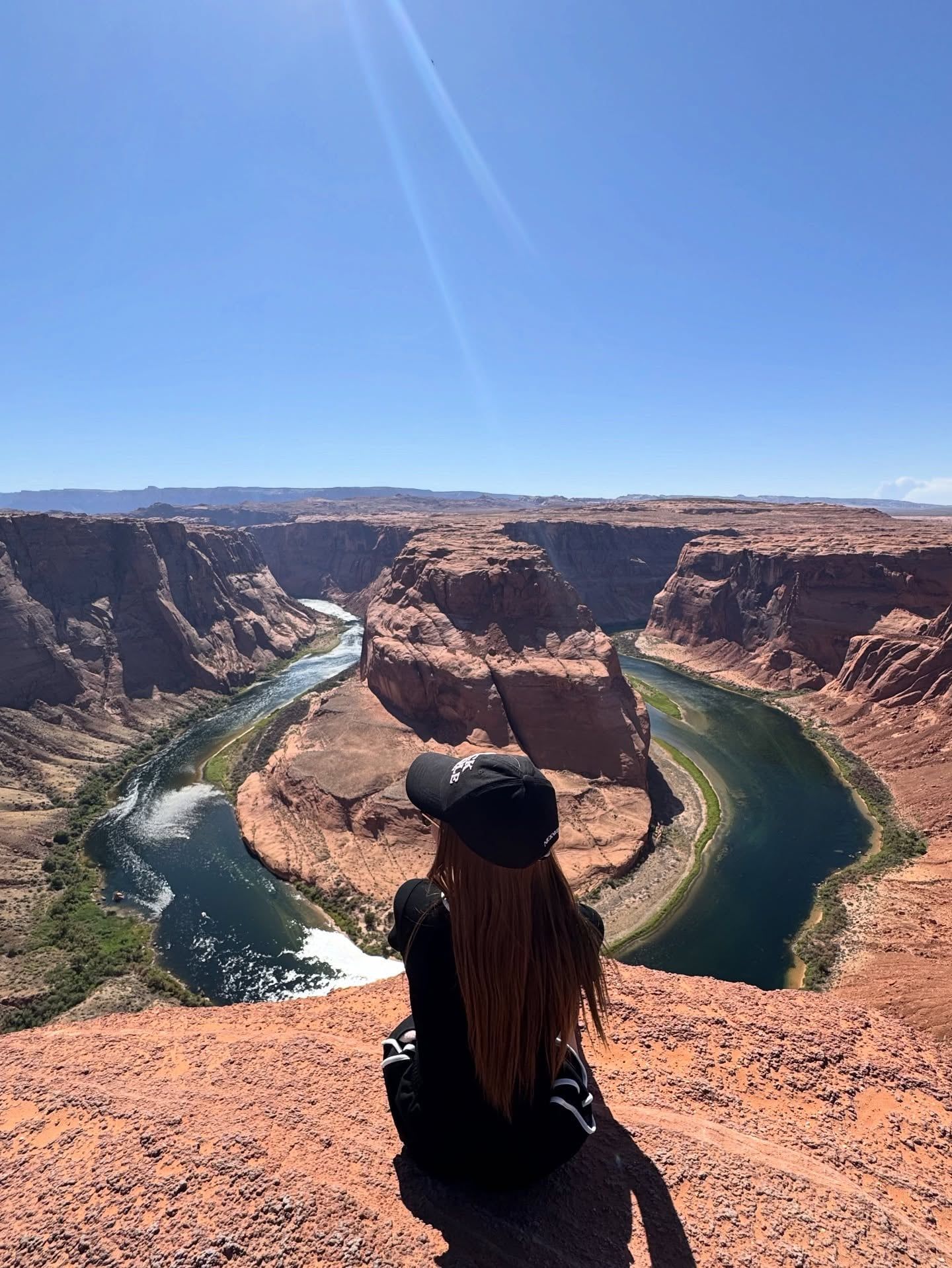
This horseshoe-shaped bend in the Colorado River features 1,000-foot sheer cliffs dropping into deep blue waters. A 1.5-mile round-trip hike leads to the overlook. The red rocks glow brightly during sunset.
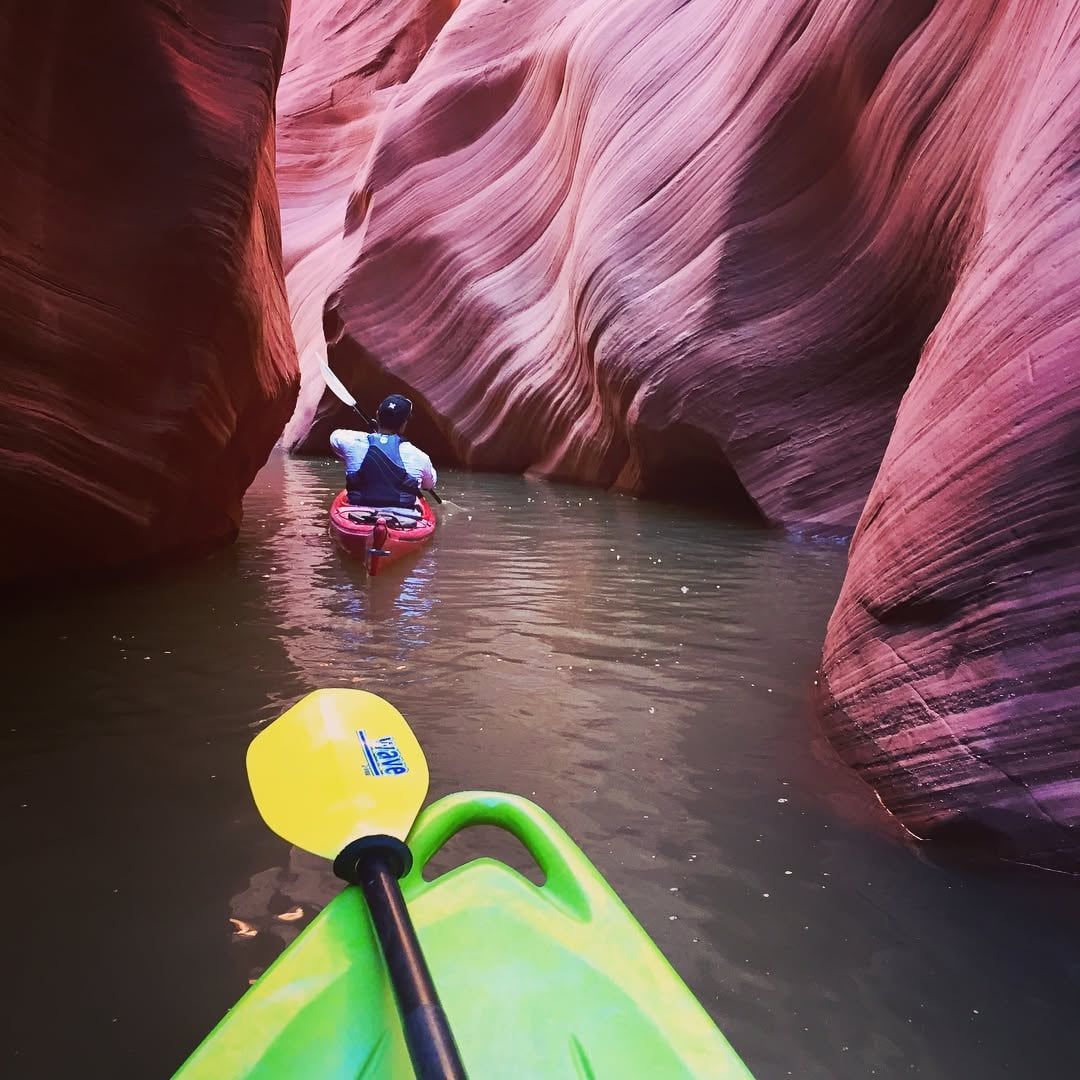
This massive desert reservoir provides extensive opportunities for boating and water sports. Visitors can rent paddleboards or kayaks to navigate the water-filled sections of Antelope Canyon. The route ensures a peaceful paddle between towering red rock walls.
This concrete arch dam controls the Colorado River to form Lake Powell. It serves as an educational stop highlighting regional engineering achievements. The site provides panoramic views of the surrounding desert landscape and river canyon.
Read what travelers share about their experience visiting Antelope Canyon — from practical tips to personal highlights.
Independent entry is strictly illegal because the canyon is located on sacred Navajo Nation land. All visitors must book a guided tour with an authorized Navajo-led operator. You should reserve your spot online several months in advance as tour slots sell out quickly.
Expect to pay a mandatory $15 Navajo Parks & Recreation permit fee per person, plus the cost of your guided tour. Upper Antelope Canyon tours range from $85 to $159 depending on the time of day, while Lower Antelope hiking tours cost $80.50 for adults and children over four.
The famous light beams are best viewed from April to October during the midday hours of 11:00 AM to 1:00 PM. During the winter months of November to February, the sun's lower angle means these beams are rarely visible.
A standard guided tour of a single canyon section typically takes 60 to 90 minutes. If you plan to visit both Upper and Lower Antelope Canyons, you should allocate 4 to 5 hours for the complete trip.
Antelope Canyon is located near Page, Arizona, which is about a five-hour drive from Las Vegas. There is no direct public transportation to the site. Visitors must either drive themselves or book a commercial bus tour originating from Las Vegas or Phoenix.
Backpacks, purses, and large bags are strictly prohibited to protect the narrow sandstone walls. You can bring a handheld camera or smartphone, but tripods, monopods, selfie sticks, and drones are banned on standard sightseeing tours. Carrying a clear water bottle is permitted and highly recommended.
Neither Upper nor Lower Antelope Canyon is wheelchair accessible due to deep sand, rocky terrain, and narrow corridors. Lower Antelope requires navigating five flights of steep metal stairs, and Upper Antelope involves a 200-foot elevation climb with stairs at the exit.
Visitors are required to wear sturdy, closed-toe shoes to safely navigate the sandy floors and metal ladders. Temperatures inside the shaded slot canyons can be significantly cooler than the outside desert heat, so layered clothing is highly recommended. You should also wear sunscreen and bring a hat or handkerchief to protect against blowing sand.
Browse verified tours with free cancellation and instant confirmation.
Find Tours